Local beats global: estimating TP53 mutation effects with ESM-2 embeddings [archived]
A single amino-acid substitution can turn off a protein — and predicting which missense mutations are harmful from sequence alone remains one of the hardest problems in computational biology. TP53, the most frequently mutated gene in human cancer, is a prime example: thousands of its variants have known functional effects, but most possible substitutions remain uncharacterized. Sharpen the opening by foregrounding the central challenge right away.
Classical methods like BLOSUM62 score substitutions using aggregate evolutionary data, but they ignore the sequence context around the mutation. Protein language models such as ESM-2 promise more: contextual, per-residue embeddings. The question is how to turn them into a mutation-effect score. Should you compare whole-protein embeddings, or focus on the neighborhood of the mutated site?
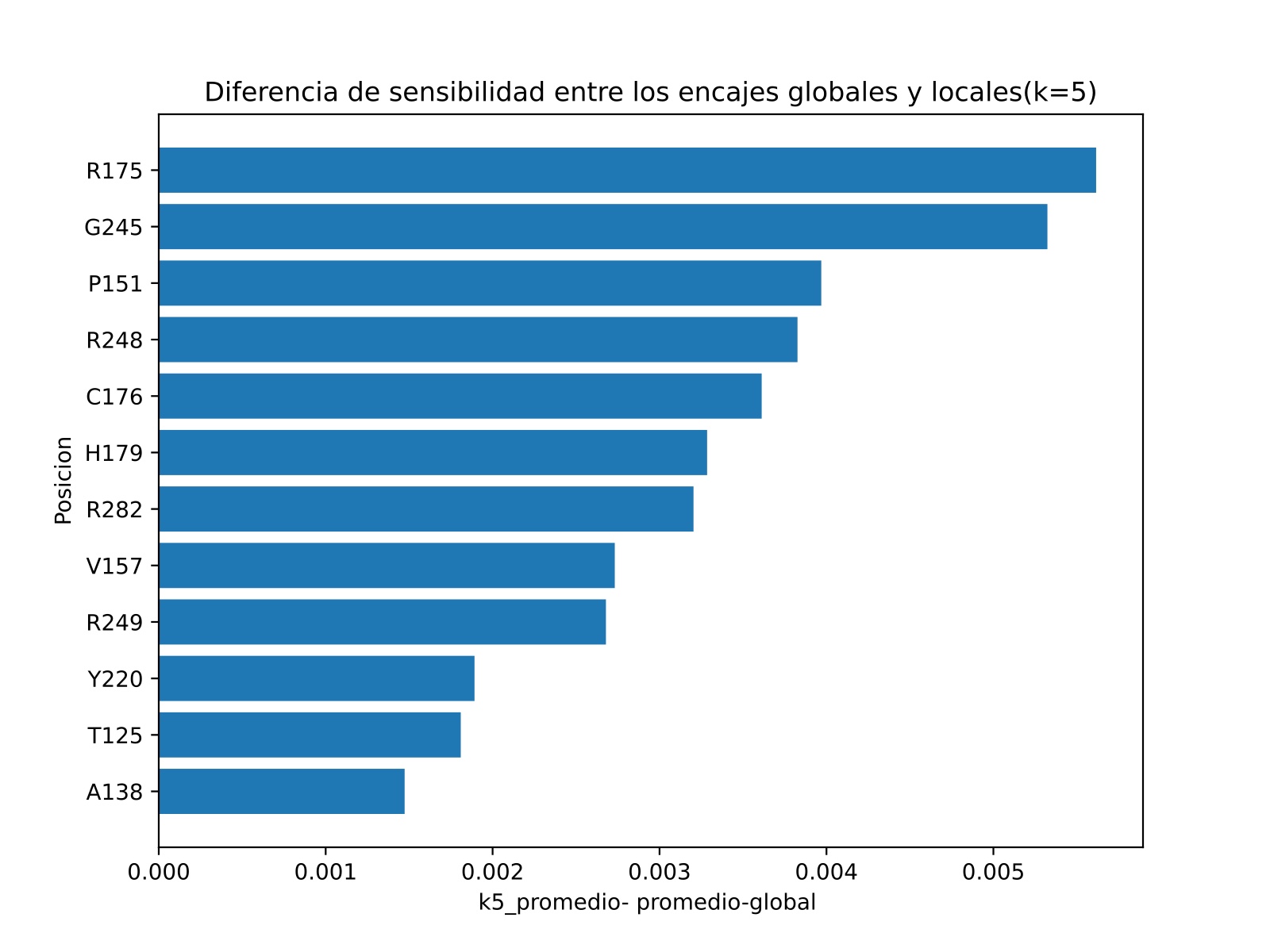
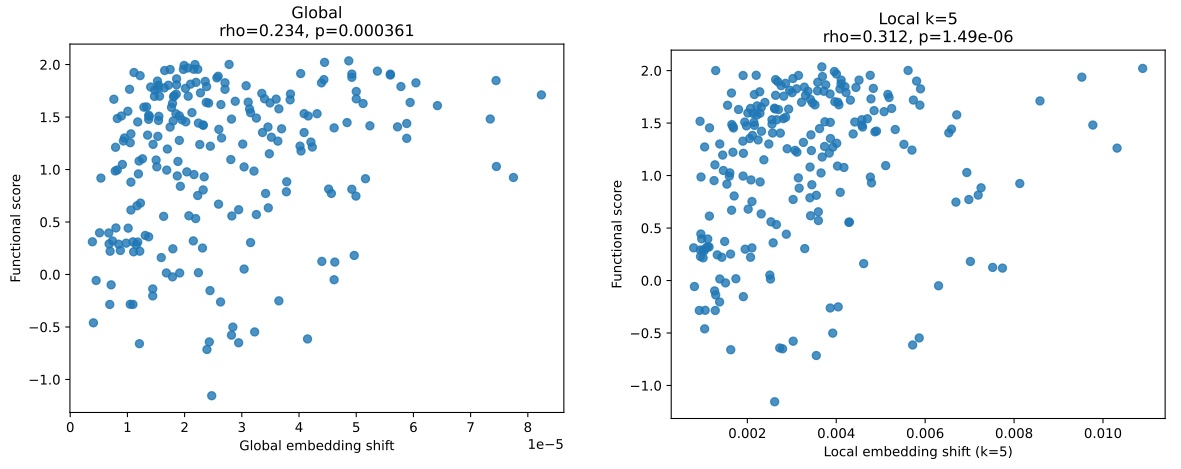
To find out, I built a synthetic panel of 228 point mutants across 12 positions in the TP53 DNA-binding domain and embedded wild-type and mutant sequences with ESM-2 (650M). Comparing WT–mutant cosine distances globally and in local windows (k=0/3/5) showed that global averaging dilutes the signal of a single substitution, while a local window (k=5) recovers a stronger, more interpretable perturbation — one that correlates significantly with experimental MAVE-DB functional scores. Sharpen the opening by bringing the key result forward.
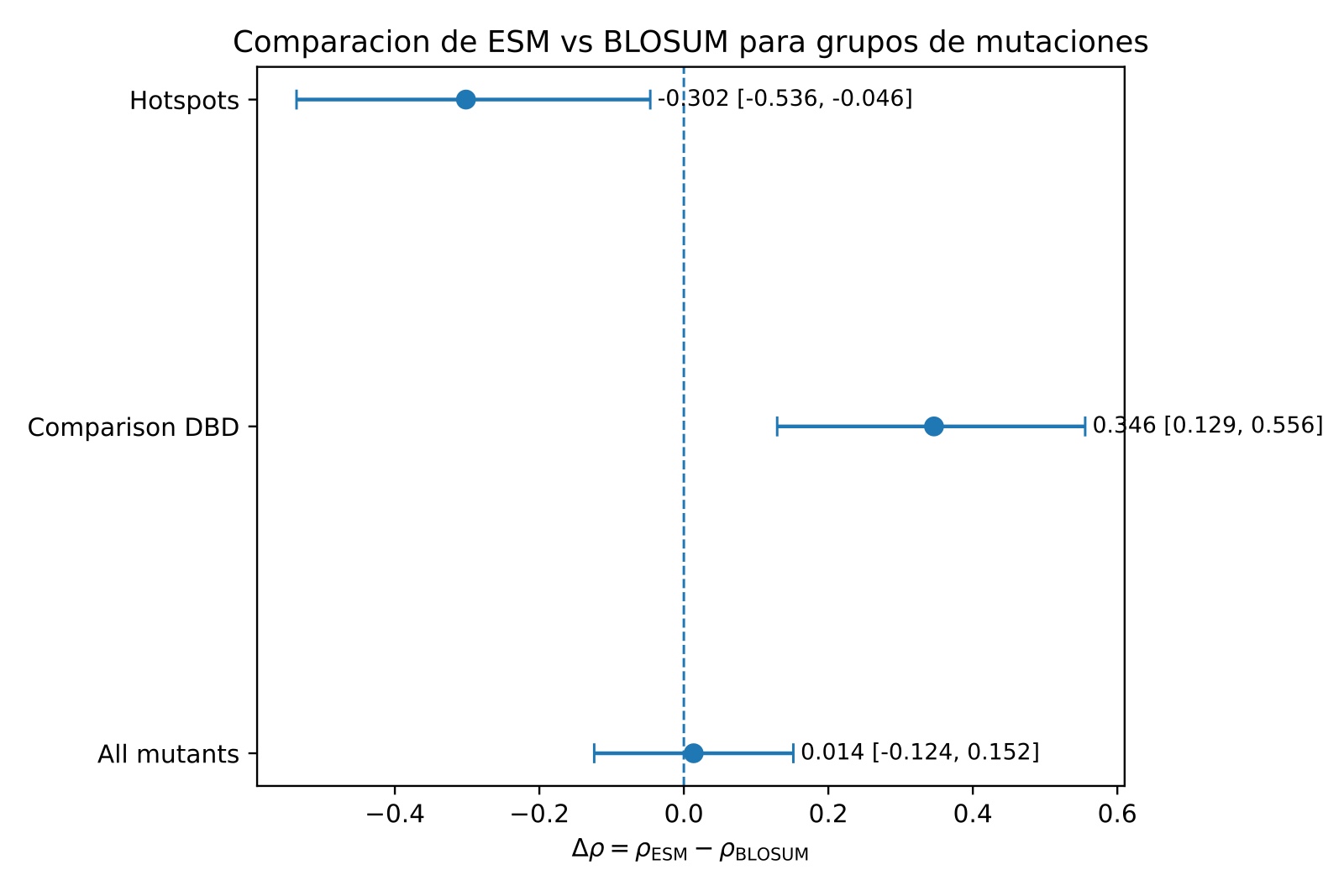
The twist: against BLOSUM62 there is no uniform winner. In the comparative DBD
subset where local context matters, ESM-2 outperforms BLOSUM62, while BLOSUM62 remains competitive at canonical hotspots, where the chemistry of the substitution already tells most of the story. Representation — local vs global — matters as much as the model itself.
The takeaway: protein language models don’t automatically replace classical baselines; they add value where local sequence context carries information that substitution chemistry alone misses.
Want to dig in? All code, notebooks, figures, and the full report (in Spanish) are in the repo.